


Tokyo Metropolitan Assembly Members Visit IISO: A Significant Step Toward Strengthening Community Engagement and Multicultural Understanding
- Nao sensei
- May 1
- 2 min read
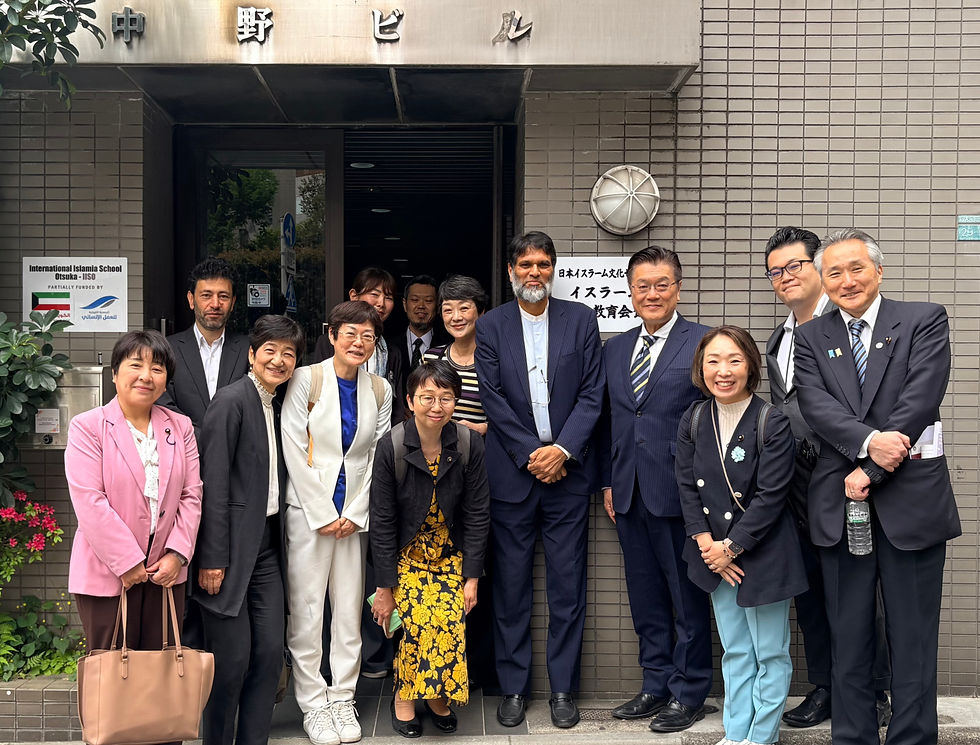
On April 15, 2026, the International Islamia School Otsuka (IISO) welcomed a distinguished delegation of Tokyo Metropolitan Assembly members representing multiple political parties. This important visit provided a valuable opportunity to introduce IISO’s educational philosophy, showcase our students’ achievements, and highlight the contributions of the Japan Islamic Trust (JIT) to local communities in Tokyo.
This visit marks a meaningful milestone in strengthening dialogue between Tokyo policymakers and the diverse international families we serve.
Delegation of Tokyo Assembly Members
Representatives from seven political groups attended the visit, including:
Tokyoites First Party
Liberal Democratic Party (LDP)
Constitutional Democratic Party / Mirai Kaigi / Citizens’ Network / Independent Group
Komeito Party
Japanese Communist Party
Green Tokyo
Regional Political Party: Association for the Protection of Freedom
Their shared mission is to develop policies that make Tokyo a more welcoming and supportive city for foreign residents.
Purpose of the Visit
The delegation visited IISO to:
Understand how Islamic schools contribute to Tokyo’s multicultural landscape
Learn about IISO’s educational approach and community engagement
Observe how international and minority children thrive in a culturally responsive environment
Explore how JIT support local communities through volunteer work and cultural exchange
Introduction to IISO’s Mission and Growth Introduction to IISO’s Mission and Growth Introduction to JIT’s Mission and Activities Introduction to JIT’s Mission and Activities
Highlights of the School Tour
1. Introduction to IISO’s Mission and Growth
The visit began with an overview of:
IISO’s educational philosophy
Our multicultural and multilingual environment
The expansion of student nationalities
JIT’s long-standing contributions to Japanese society
Assembly members expressed strong interest in how IISO balances academic excellence with cultural and emotional support.
Classroom Visits & Student Interactions Classroom Visits & Student Interactions Classroom Visits & Student Interactions
2. Classroom Visits & Student Interactions
The delegation visited multiple grade levels, observing:
Kindergarten story time on spring themes
G10 & G11 Q&A session, where students confidently discussed future dreams, university goals, and N1 achievements
G5–G7 discussions, showcasing lively participation and strong communication skills
G1–G3 Q&A, where students shared their dreams and favorite subjects with enthusiasm
Members were particularly impressed by:
Students’ fluency in Japanese
Their confidence in speaking with adults
Their active engagement and willingness to express themselves
Their respect for Japanese culture, demonstrated through calligraphy, Hyakunin‑Isshu, and karuta projects
Assembly Members’ Impressions
The delegation highlighted several unique strengths of IISO:
Deep integration of Japanese culture among students
Strong desire to live in Japan long-term
Ability to express opinions clearly and respectfully
High motivation and self‑advocacy
These qualities reflect IISO’s commitment to nurturing globally minded, confident, and community‑oriented learners.

Strengthening Community Ties Through JIT
During the final Q&A session, assembly members learned about:
JIT’s volunteer activities
Community support programs
Cultural exchange initiatives
IISO’s role in promoting mutual understanding between Japanese society and international families
This dialogue reinforced the importance of collaboration between educational institutions and local government in building a more inclusive Tokyo.
Looking Ahead
IISO is honored to have hosted this diverse group of Tokyo Metropolitan Assembly members. Their visit reflects growing recognition of the vital role international Islamic schools play in supporting Tokyo’s multicultural future.
We remain committed to:
Providing high‑quality, values‑based education
Supporting the academic and emotional growth of every child
Strengthening partnerships with local communities and policymakers
Contributing positively to Japan’s social and cultural landscape

Comments