


IISO Leadership on the International Stage: Principal Invited to Present at Two Major UAE Education Conferences

Updated: 1 day ago
International Islamia School Otsuka (IISO), an Islamic international school in Tokyo, Japan, is pleased to announce that IISO Principal, Dr. Zaineh, has been invited to speak at two international education conferences in the United Arab Emirates in September and October 2026.
IISO Leadership on the International Stage, Dr. Zaineh will represent IISO at the 7th MENA Higher Education Leadership Forum (MENA-HELF 2026) in Dubai and the 3rd Abu Dhabi University International Conference on Education (ADU_ICEDU2026) in Al Ain.
The two invitations provide an important opportunity to share IISO’s experience in educational leadership, institutional transformation, culturally responsive education, Islamic education, and inclusive schooling in Japan with an international community of educational leaders, researchers, and practitioners.
From Tokyo to Dubai: Sharing the IISO Leadership Framework
From 28–30 September 2026, Dr. Zaineh will participate as an invited speaker at the 7th MENA Higher Education Leadership Forum in Dubai, UAE, held under the theme:
“Global Challenges, Local Impact: Higher Education’s Role in Shaping a Resilient Future.”
He will present the case study:
Institutional Transformation Model for Inclusive Schooling in Minority Contexts: The IISO Leadership Framework
The presentation examines the transformation of International Islamia School Otsuka (IISO) from a small community educational initiative into a diverse K–12 school serving Muslim and international families in Tokyo.
It introduces the IISO Leadership Framework, developed around interconnected areas including values-based learning, inclusive student development, distributed leadership, continuous improvement, institutional capacity, and community partnerships.
At the center of the case study is a question relevant to many minority-serving and community-based educational institutions:
How can a school grow and build institutional resilience while preserving its educational philosophy, identity, and commitment to the individual needs of its students?
IISO's Transformation as an Islamic School in Japan
IISO's development illustrates the opportunities and challenges involved in building an Islamic educational institution within Japan's distinctive social and educational environment.
Since the opening of its Primary School in 2017, IISO has grown from six students to more than 148 students, while its teaching staff has expanded from four to more than 40 educators.
School facilities have grown from approximately 60 m² to more than 1,000 m², and IISO now serves students representing more than 15 nationalities.
Alongside this expansion, the school has worked to develop the institutional structures necessary to support sustainable educational quality.
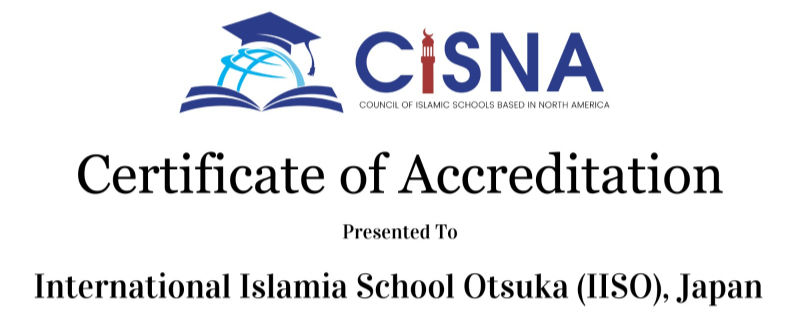
The Dubai presentation will highlight IISO's progress in areas including CISNA Accreditation, Cognia candidacy, distributed leadership, professional development, quality assurance, digital learning systems, university linkages, and community partnerships.
Together, these developments form part of IISO's continuing transition from a small community school toward a more mature and internationally connected K–12 educational institution.
Continuing the Dialogue at Abu Dhabi University
Shortly after the Dubai forum, Dr. Zaineh will travel to Al Ain, United Arab Emirates, where he has also been invited to speak at the 3rd Abu Dhabi University International Conference on Education (ADU_ICEDU2026) on 7–8 October 2026.
The conference will be held under the theme:
“Designing Pedagogical Approaches for Future Learners: Challenges and Opportunities.”
The conference provides an international platform for examining how schools, universities, and educators can respond to changing learner needs, technological development, cultural diversity, and the evolving demands of future education.
Dr. Zaineh will present his research:
Examining Culturally Responsive and Inclusive Education in a Japanese Islamic School: A Case Study of the International Islamia School Otsuka (IISO)
The research examines how culturally responsive educational practices, Islamic values, individualized student support, and strength-based engagement can contribute to student well-being, confidence, belonging, and educational success within a minority educational setting in Japan.
Culturally Responsive and Islamic Education in Japan
Muslim and international students growing up in Japan may navigate multiple linguistic, cultural, religious, and educational environments simultaneously.
This makes the relationship between identity, belonging, educational inclusion, and academic development particularly important.
The research presented at Abu Dhabi University examines IISO as a case study of how an Islamic school in Japan can respond to these challenges while helping students participate positively in Japanese society.
Rather than treating academic achievement and cultural or religious identity as competing priorities, the IISO experience explores how they can support one another through an educational environment that recognizes students' backgrounds, strengths, and individual needs.
The Abu Dhabi University presentation therefore complements the institutional perspective being presented in Dubai.
While the MENA-HELF 2026 case study focuses primarily on institutional transformation, educational leadership, governance, capacity building, and resilience, the ADU_ICEDU2026 presentation brings the discussion closer to students and classroom practice.
Two UAE Education Conferences, One IISO Journey
Together, the two presentations offer two perspectives on the same institutional journey.
In Dubai, the focus will be on how an educational institution can develop the leadership, governance, organizational capacity, partnerships, and continuous-improvement structures necessary for sustainable transformation.
In Al Ain, the focus turns toward what that transformation means for students themselves—their identity, sense of belonging, well-being, confidence, engagement, and learning.
This connection reflects an important principle behind IISO's educational development:
Institutional transformation ultimately has value when it improves the educational experience and future opportunities of students.
Sharing IISO's Experience Beyond Japan
The experiences being presented internationally are the result of collective work across the IISO community.
They have developed through the contributions of our students, teachers, staff, parents, school leadership, Board, community partners, universities, and collaborating institutions.
From integrating international, Japanese, and Islamic education to strengthening student support, teacher leadership, STEM education, digital innovation, quality assurance, and partnerships with Japanese universities and community organizations, IISO continues to explore an educational model responsive to the distinctive needs of Muslim and minority learners growing up in Japan.
Recent initiatives also demonstrate how this philosophy extends beyond conventional classroom learning. IISO students have participated in career and STEM experiences such as an Open Campus visit to Toyota Tokyo Automobile College, providing exposure to automotive technology, engineering, and future career pathways.
Similarly, through IISO's STEM and Robotics Program, students have engaged in hands-on robotics, coding, sensors, engineering problem-solving, and practical experimentation designed to build confidence and an engineering mindset.
These experiences illustrate a broader goal: preparing students not only academically, but also to understand their strengths, explore future pathways, and participate confidently in the society around them.
Building Bridges Between Islamic Education in Japan and the International Education Community
Participation in MENA-HELF 2026 and ADU_ICEDU2026 gives IISO an opportunity not only to share its experience, but also to learn.
International academic engagement allows the school to exchange ideas with educational leaders and researchers, examine practices developed in other institutional contexts, and establish relationships that may contribute to IISO's future development.
For an Islamic school operating in Japan, these exchanges are particularly valuable. They enable IISO to contribute perspectives emerging from the Japanese context while learning from institutions addressing similar questions of educational quality, identity, inclusion, leadership, innovation, and student development elsewhere in the world.
Looking Toward IISO Vision 2030
As International Islamia School Otsuka continues toward IISO Vision 2030, international academic engagement forms part of the school's broader commitment to continuous improvement, educational quality, research-informed practice, and international collaboration.
The two UAE conference invitations represent another step in bringing IISO's experience in Japan into wider conversations about the future of education.
We congratulate Dr. Eng. Hussam Eldein Zaineh on these two invitations and look forward to seeing IISO's educational experience and research represented in Dubai and Al Ain in September and October 2026.
From Tokyo to the international stage, IISO continues to learn, contribute, and build bridges through education.
IISO Leadership on the International Stage: Principal Invited to Two UAE Education Conferences IISO Leadership on the International Stage: Principal Invited to Two UAE Education Conferences


Comments